



WHAT ARE SAFE LEVELS OF MOLD FOR MY HOME OR BUSINESS?
One of the most common questions that we get asked
when dealing with a mold removal/mold remediation
project. The answer isn’t as clear as we would like it to
be. The Federal or State governments have not set
specific standards saying what are safe levels of mold.
Part of the reason for this is that mold effects each person differently! With approximately 80% of the
molds out there are primarily allergenic, it’s very hard to determine how each person will react. Think of
people who are allergic to various things. Peanuts are a great example. Most of us have no problems
eating peanuts, but there are some people out there who are allergic to them. In some cases, their
reactions are so bad to them that they could die.
For the most part, most allergic reactions to mold are not that dire. Although the range of reactions can
go from very minor reactions to fairly severe reactions. Again it depends on the person. Toxic molds are
molds that can harm anyone. Black mold (Stachybotrys) is the mold that gets all the internet attention.
It is a very dangerous mold and extreme care needs to be taken when dealing with a mold removal
project that involves it! Keep in mind however, just because a mold is black, doesn’t mean that it is the
“Black Mold”. It is impossible for anyone to look at the mold and say with any amount of certainty “that
mold is xyz.” A sample needs to be taken to a lab to determine the exact type of mold it is.
That depends on the mold and how much there is of it. The EPA recommends that consumers can handle mold
jobs if the areas in question are smaller 3ft x 3ft. See EPA guidelines on the following link:
http://www.epa.gov/mold/mold-cleanup-your-home
If you have high risk people living in your home, (Children under the age of 2, anyone with respiratory issues or
immune deficiencies) if the area is larger then the 3ftx3ft rule, or if there has been signs of water damage, we
recommend (So does the EPA) that you use a qualified professional!
Our staff has been trained to adhere to all IICRC (S502)/Clean Trust mold remediation / mold removal standards.
We follow guidelines put forth by the EPA, National Association of Environmentally Responsible Mold Contractors
and the Indoor Air Quality Association (For mold removal.)
We are fully certified for mold remediation/mold removal, so you can be assured your mold removal project will
be done correctly. We use third party testing to show that we have successfully removed the mold in the structure
that we worked on. Further more, we give a TWO year guarantee that the mold will not come back on the area’s
that we worked on! (Talk to one of our mold removal specialist for details on our guarantee)

CALL US WHEN YOU NEED A MOLD REMOVAL / MOLD REMEDIATION COMPANY IN INDIANAPOLIS, CARMEL, FISHERS,
ZIONSVILLE, PLAINFIELD, BROWNSBURG, GREENWOOD, NEW PALESTINE, AVON, PLAINFIELD
OR ANYWHERE ELSE IN CENTRAL INDIANA!
317-647-MOLD
You can find mold anywhere you have a moisture issue!
Mold growth can happen anywhere that you have a combination of moisture and food!
The food being just about anything. The primary areas that we see mold are the following:
•
CRAWL SPACE - Crawl Space Mold Removal
•
ATTIC Spaces - Attic Space Mold Removal
•
KITCHEN / BATHROOMS - Kitchen / Bathroom Mold Removal
•
BASEMENTS
•
CLOSETS
•
UTILITY ROOMS
•
REALLY ANYWHERE IN YOUR HOUSE!!!
***** OVERLOOKING THE CAUSE OF THE MOLD IS THE NUMBER ONE MISTAKE PEOPLE MAKE *****
As bad as mold can be for you, its just a symptom of a bigger problem! It is very important to understand why
the mold is there in the first place! Was there a flood, roof leak, pipe leak, do we have proper ventilation in the
attic or crawl space, is there a proper vapor barrier installed in your crawl space?
The best methods for mold removal can be used, everything done correctly,
but if you don’t fix the moisture issue, mold will come back!
RECENT VERIFIED REVIEWS

IDENTIFYING MOLD TYPES: When doing a mold removal project, some people like to know exactly what type of mold
they are dealing with. With over a 1000 different types of mold in the US, it is very hard to tell what type of mold is growing just
by looking at it. In fact, if you have a “remediation professional” claim that a certain mold is xyz just by looking at it, I would stay
away from that person! Mold can only be identified when looked at with a microscope. The fact that a mold is black for
example, doesn’t mean that it is THE BLACK MOLD. (STACHYBOTRYS) There are around 30 different kinds of mold that can appear
black. Only one is the BLACK MOLD!
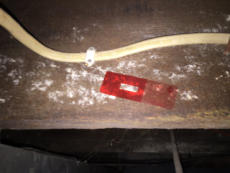
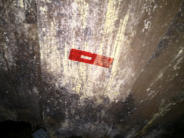
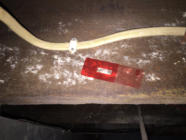
Look below to see some samples from our mold library. These samples have been identified by our lab.


Servicing Indianapolis, Greenwood, Avon, Brownsburg, Plainfield, Zionsville, Carmel, Fishers,
Martinsville, Mooresville, Westfield, Noblesville, New Palestine, Greenfield, McCordsville
and the surrounding areas. Servicing the Indianapolis IN area including 46077, 46107, 46113, 46183,
46201, 46202, 46203, 46204, 46205, 46208, 46214, 46217, 46218, 46219, 46220, 46221, 46222, 46224,
46225, 46226, 46227, 46228, 46229, 46231, 46234, 46235, 46236, 46237, 46239, 46240,
46241, 46250, 46254, 46256, 46259, 46260, 46268, 46278.
A+ Restoration Inc. - South
1620 W Smith Valley Road #5
Greenwood, In 46142
March 9, 2019
Verified Angies List Review
Sel - Indianapolis, IN


ASPERGILLUS/PENICILLIUM FAMILY OF MOLDS
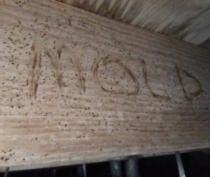
EXAMPLES OF CRAWL SPACE MOLD
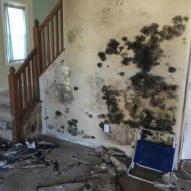
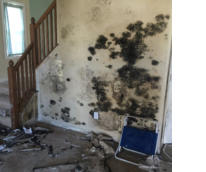
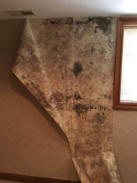
BASEMENT / DRYWALL MOLD
CLADOSPORIUM FAMILY OF MOLD
WINDOW MOLD
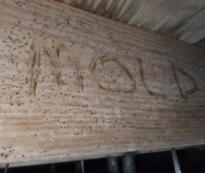
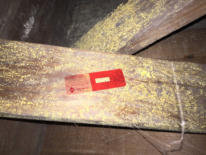
ATTIC DECKING MOLD
ALTHERNARIA / CLADOSPRIUM
ALTHERNARIA/ ULOCLADIUM
ALTHERNARIA MOLD
STACHYBOTRYS MOLD (The Black Mold)
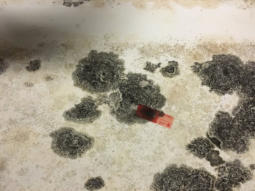
Stachybotrys mold likes to grow on soft materials such as dry wall. It loves a very wet environment. If you look at the pictures above, you can
also see that when it colonizes, it does so by forming circular patterns. It is not uncommon to see molds growing together. Black mold creates toxins as
a form of defense against other molds attacking it. Those same toxins just happen to be bad for humans and animals as well! While Stachybotrys
gets the most attention on the Internet, it isn’t the most common mold that we deal with. In fact, we really only see if about 25% of the time.
But because of the potential health concerns that it can cause both to humans and animals, extreme care must be given when dealing with it!
OTHER THINGS TO KEEP IN MIND WHEN DOING THIS YOURSELF: You should take extreme care when dealing with mold!
1. PPE: You need to use proper personal protective (PPE) items. When working on a mold removal project, you should at the
very least use a N95 designated mask. These can be purchased at any home improvement store. Gloves are also another item
that you should be using.
2. Containment: Cross contamination of your house or office should be a major concern. The area that you are working on should
be sealed off from other areas. Any air conditioning/heating returns that are in the area that you are working, should be sealed!
3. Negative Air Scrubbers should be used when possible. This helps with keeping the mold in the contaminated area only.
Most web pages seem to show pictures of what a mold looks like when viewed by a microscope. That doesn’t help YOU
in identifying the mold that you may or may not be dealing with. The images below are designed to help you recognize
various types of mold that might be growing in your home.
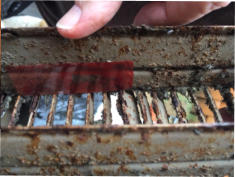
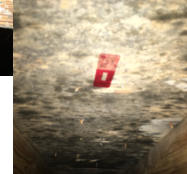
On a Vent
(Found on joist in a basement)
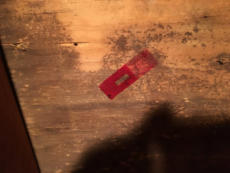
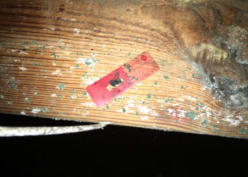
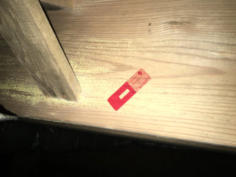
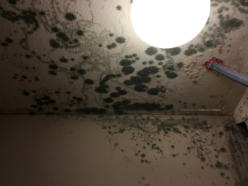
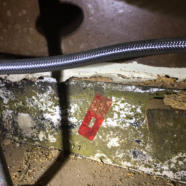
*** Aspergillus/Penicillum is probably the most common mold that has to be dealt with. It can grow just about anywhere
in a building. It can be found on walls, carpet, clothes, furniture, you name it! This mold can be found in multiple colors. ***

Found on cabinets
OK, I understand that I should use a professional mold remediation service to handle my mold problem.
But I want to try and save money!
We still recommend that you hire a professional for your mold removal project if one of the two following situations apply:
1. The area is over 3ft x 3ft. (Again this is an EPA guideline)
2. If anyone in your home has respiratory issues or considered high risk.
But if you are set on doing this yourself………… (Please keep the following in mind)
1. Watch Out For Magical Claims By Companies Or On The Internet:
If you look on the Internet, you will see multiple ways that people claim to clean up/remove mold. While we are not saying that some of
these claims will or will not work, it is our opinion that they don’t work 100%! Some of the more common methods talked about on the
Internet or by some “professionals” are listed below:
A. BLEACH USED AS WAY FOR MOLD REMOVAL: Back in the 1990’s Des Moines Iowa had a huge flood.
It was so bad, that some of the homes along a river were flooded to their roof tops. The federal
government moved in to help the victims of this flood. To combat mold the government handed out bottles of
bleach as a way to kill mold that was growing as a result of this flood. That was the 1990’s, we are now in 2019!
The federal government / EPA has learned since then, that BLEACH DOES NOT WORK WELL IN REMEDIATION OF MOLD. Bleach
doesn’t have the ability to get to the root of the mold that has grown into porous surfaces. Given time mold will come back on area’s treated with bleach.
BE CAREFUL OF COMPANIES WHO CLAIM TO BE MOLD REMEDIATION COMPANIES WHO USE BLEACH BASED PRODUCTS!
PRO’S VS CON’S OF USING BLEACH
Positive Points of using bleach:
1. It is very cheap!
2. Works well on NON porous surfaces. (Ceramic tile, etc)
Negative Points of using bleach:
1. Only kills the top layer of mold. (Studies have shown it kills about 40% of the mold on porous surfaces)
2. Breathing bleach does more harm to your body then most molds!
3. It is not a green friendly method of removing mold! In fact, bleach is very hazardous to the health of your family and pets!
B. Ultra Violet Light As A Way To Remediate Mold: When companies claim that they can remove mold using ultra violet light, it sounds
incredibly attractive to potential customers. In short, it sounds like “cutting edge” technology or the latest, greatest technology. And in
theory, it is very good. BUT then there is the practical side of things. Ultra violet light breaks up the DNA of mold which
results in the sterilization of the mold. Sounds great doesn’t it????? The problem is, Ultra violet light only works if the light is kept
1-2 inches from the effected surface. Depending on the surface, it takes anywhere from 2-10 seconds in that area to effectively sterilize
the mold. As the distance the light is from the surface increases, the intensity of the light decreases and renders the process ineffective.
Ultra violet light is usually sold by HVAC companies as an additional item for their sales people to sell. Their unit works with the HVAC
system. The problem with those units is that mold spores are not saturated with the ultra violet light nearly long enough or close enough
to the unit. In our opinion, these units do not work well for mold removal/mold remediation.
PRO’S VS CON’S OF USING ULTRA VIOLET LIGHT:
Positive Points of using ultra violet light:
1. Sounds like cutting edge technology!
Negative Points of using ultra violet light:
1. Unless it is held 2” above moldy surface for 2-10 seconds, it doesn’t work.
2. Cost of unit is expensive
3. In our opinion, ultra violet light in a HVAC setting, can NOT expose the mold enough to its light, to properly kill it.
C. Borax Used As A Way To Eliminate Mold Problems:
Borax is pushed as a “Natural” way to remove mold. While it is a natural method, it has the same issues as bleach! It cannot get the the root of the mold.
PRO’S VS CON’S OF USING BORAX:
Positive Points of using borax:
1. Its cheap!
2. Its a natural method.
Negative Points of using borax:
1. Doesn’t work well on porous surfaces. Can’t get to the root of the mold!
2. Borax is dangerous to mucus membranes such as eyes. It is dangerous if inhaled accidentally and is very dangerous to your pets!
3. Because of the health hazards it can cause, it is not considered a “green method” or kid or pet friendly!
D. Other Internet Methods Of Mold Removal:
There are a bunch of other methods that folks have posted on the Internet. Vinegar,
baking soda, ammonia, tea tree oil, grape fruit see extract, the list goes on and on! Some of these methods may work some don’t work at all. In most
cases, the mold will return in 2-3 months when these methods are used. The use of fogging type products do NOT do enough to take care of your mold
problem. (See comments below!)
2. Just Killing Mold Isn’t Enough! Dead mold can be just as harmful as live/active mold. So once you have treated the mold to kill it, you still have
have more work to do! Remove active & dead mold: Either do this by wiping the mold away with a rag or remove the item that the mold has
grown on. Example of this would be treating drywall. Cut it out after you have sprayed it with a moldicide. Care should be given to bag it up
immediately, so that you don’t cause cross contamination. Remember, you must remove the dead mold!
3. Encapsulation Of Wood Or other Areas That Have Mold Growth. General contractors who have not been properly trained in mold removal/ mold
remediation like to cover the mold up with KILLS. KILLS is an awesome product if you are trying to block stains that have been caused by water or
smoke damage. BUT it wasn’t made for mold. Far to many times, we see the mold growing on top of the KILLS (The KILLS becomes food for the mold)
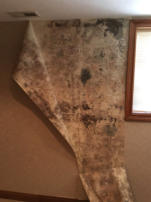
On Wall
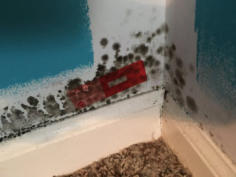
If your selling your home and you had your home inspected, the home inspector will usually use some vague term stating
that you have a “mold like substance”. If you see wording along that line, chances are you have the mold pictured above!











August 4, 2019
Google Review
Kevin Long - Indianapolis, IN



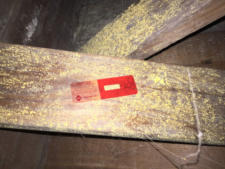
UNDER KITCHEN SINK
PAECILOMYCES MOLD
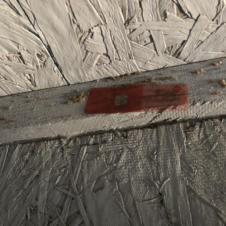
Not one of the more common molds that we deal with. But still, we have found it on occasion in wet crawl spaces.
April 8, 2019
Google Review
Sarah Johnson - Carmel, IN
A+ Restoration Inc. - North
484 E Carmel Dr,
Carmel, IN 46032


Couldn’t be happier. Brett and crew were the best. Jeff was always available for advice. Well worth the money.
Thank you for a job well done!
We had a bit of mold show up and were worried that there might be a bigger issue. Jeff came out, gave us a free estimate
and helped us figure out how to deal with it ourselves! He gave us options, insight and peace of mind. I would highly
recommend him.
We had an issue at our house with water and mold damage. Jeff came out on a Saturday and did a walk through and told me
exactly what should be done and was priced well below several other companies. Came out did the work done very professionally
and timely His guys did a great job and I highly highly recommend using them if the need ever occurs. Thanks again Jeff for your
professionalism, hard work and excellent work. Five stars are not enough to rate the work done.
FOR PROFESSIONAL MOLD REMEDIATION
CALL: 317-647-6653
ASK ABOUT OUR 5% BEST PRICE GUARANTEE
317-697-2046






© 2019 A+ Restoration Inc. - All Rights Reserved
A+ Restoration Services - Mold Removal
FACTS YOU SHOULD KNOW ABOUT MOLD &
MOLD REMOVAL:
One of the most common questions that we get
asked when dealing with a mold removal/mold
remediation project. The answer isn’t as clear as
we would like it to be. The Federal or State
governments have not set specific standards
saying what are safe levels of mold.
Part of the reason for this is that mold effects
each person differently! With approximately 80%
of the molds out there being allergenic, it’s very
hard to determine how each person will react.
Think of people who are allergic to various things.
Peanuts are a great example. Most of us have no
problems eating peanuts, but there are some
people out there who are allergic to them. In some
cases, their reactions are so bad to them that they
could die.
For the most part, most allergic reactions to mold
are not that dire. Although the range of reactions
can go from very minor reactions to fairly severe
reactions. Again it depends on the person. Toxic
molds are molds that can harm anyone. Black
mold (Stachybotrys) is the mold that gets all the
Internet attention. It is a very dangerous mold and
extreme care needs to be taken when dealing with
a mold removal project that involves it! Keep in
mind however, just because a mold is black,
doesn’t mean that it is the “Black Mold”. It is
impossible for anyone to look at the mold and say
with any amount of certainty “that mold is xyz.” A
sample needs to be taken to a lab to determine the
exact type of mold it is.

CALL US WHEN YOU NEED A MOLD REMOVAL / MOLD REMEDIATION COMPANY IN INDIANAPOLIS, CARMEL, FISHERS,
ZIONSVILLE, PLAINFIELD, BROWNSBURG, GREENWOOD OR ANYWHERE ELSE IN CENTRAL INDIANA!
317-647-MOLD
IDENTIFYING MOLD TYPES: When doing a mold removal project, some
people like to know exactly what type of mold they are dealing with. With
over a 1000 different types of mold in the US, it is very hard to tell what type
of mold is growing just by looking at it. In fact, if you have a “remediation
professional” claim that a certain mold is xyz just by looking at it, I would stay
away from that person! Mold can only be identified when looked at with
a microscope. The fact that a mold is black for example, doesn’t mean that
it is THE BLACK MOLD. (STACHYBOTRYS) There are around 30 different types
of mold that can appear black. Only one is the BLACK MOLD!
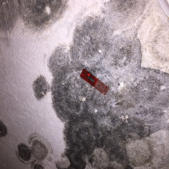
Althernaria Alternaria
Cladosporium Ulocladium
(Otherwise known as Stachybotrys)
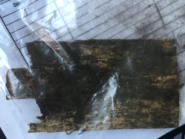
Cheatomium
Servicing Indianapolis, Greenwood, Avon, Brownsburg, Plainfield, Zionsville, Carmel, Fishers,
Martinsville, Noblesville, Mooresville, New Palestine, Greenfield, McCordsville and
the surrounding areas. Servicing the Indianapolis IN area including 46077, 46107, 46113, 46183,
46201, 46202, 46203, 46204, 46205, 46208, 46214, 46217, 46218, 46219, 46220, 46221, 46222,
46224, 46225, 46226, 46227, 46228, 46229, 46231, 46234, 46235, 46236, 46237, 46239, 46240,
46241, 46250, 46254, 46256, 46259, 46260, 46268, 46278.
SUMMARY OF THINGS TO KEEP IN MIND IF TRYING THIS YOURSELF
1. The EPA recommends that you only deal with a mold issue if you are working an area smaller then 3ftx3ft.
2. Containment, Containment, Containment. Make sure that the area that you are working on is isolated
from other areas of your house/building.
3. Use proper equipment & chemicals for mold remediation. DON’T USE BLEACH!
4. KILLING THE MOLD ISN’T ENOUGH. You need to remove the dead mold from the area. Dead mold is
just as bad for you as live mold!
5. Where the proper PPE (Personal Protection Equipment)
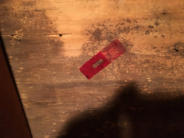
(Attic example)
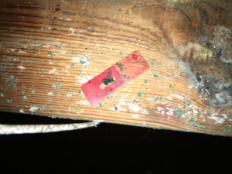
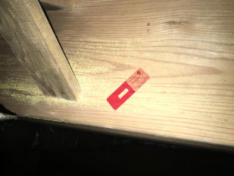
Cladosporium



RECENT VERIFIED REVIEWS
That depends on the mold and how much there is of it. The EPA recommends
that consumers handle mold jobs if the area’s in question are under then
3ftx3ft. See EPA guidelines on the following link:
http://www.epa.gov/mold/mold-cleanup-your-home
HOWEVER if you have high risk people living in your home, if the area is
larger then the 3ftx3ft rule, or if there is signs of water damage, we
recommend (And so does the EPA) that you use a qualified professional.
A+ Restoration staff have been trained to adhere to all IICRC (502s)
mold remediation/mold removal standards. We follow all guidelines put
forth by the EPA & Indoor Air Quality Association.
OK, I understand that I should use a professional mold remediation
service to handle my mold problem. But I want to try and save money!
We still recommend that you hire a professional for your mold removal project if one
of the two following situations apply:
1. The area is over 3ft x 3ft. (Again this is an EPA guideline)
2. If anyone in your home has respiratory issues or considered high risk.
But if you are set on doing this yourself……(Please keep the following in mind)
1. Watch Out For Magical Claims By Companies Or On The Internet:
If you look on the Internet, you will see multiple ways that people claim to clean
up/remove mold. While we are not saying that some of these claims will or will not
work, it is our opinion that they don’t work 100%! Some of the more common
methods talked about on the Internet or by some “professionals” are listed below:
A. BLEACH USED AS WAY FOR MOLD REMOVAL: Back in the 1990’s Des Moines
Iowa had a huge flood. It was so bad, that some of the homes along a river were
flooded to their roof tops. The federal government moved in to help the victims
of this flood. To combat mold the government handed out bottles of
bleach as a way to kill mold that was growing as a result of this flood.
That was the 1990’s, we are now in 2019! The federal government / EPA has
learned since then, that BLEACH DOES NOT WORK WELL IN REMEDIATION OF
MOLD. Bleach doesn’t have the ability to get to the root of the mold that has
grown into porous surfaces. Given time mold will come back on area’s treated
with bleach. The use of bleach is only recommended on NON porous surfaces!
Surfaces like ceramic tile would be a good example.
PRO’S VS CON’S OF USING BLEACH
Positive Points of using bleach:
1. It is very cheap!
2. Works well on NON porous surfaces. (Ceramic tile, etc)
Negative Points of using bleach:
1. Only kills the top layer of mold. (Studies have shown it kills about 40% of the
mold on porous surfaces & of course the MOLD GROWS BACK!)
2. EPA STATES that “chlorine bleach is not recommended as a routine
practice during mold cleanup.”
3. Breathing bleach does more harm to your body then most molds!
B. Ultra Violet Light As A Way To Re-mediate Mold: When companies claim that
they can remove mold using ultra violet light, it sounds incredibly attractive to
potential customers. In short, it sounds like “cutting edge” technology or the
latest, greatest technology. And in theory, it is very good.
BUT then there is the practical side of things. Ultra violet light breaks up the
DNA of mold which results in the sterilization of the mold. Sounds great
doesn’t it????? The problem is, Ultra violet light only works if the light is kept
1-2 inches from the effected surface. Depending on the surface, it takes
anywhere from 2-10 seconds in that area to effectively sterilize the mold. As the
distance the light is from the surface increases, the intensity of the light
decreases and renders the process ineffective.
PRO’S VS CON’S OF USING ULTRA VIOLET LIGHT:
Positive Points of using ultra violet light:
1. Sounds like cutting edge technology!
Negative Points of using ultra violet light:
1. Unless it is held 2” above moldy surface for 2-10 seconds, it doesn’t work.
2. Cost of unit is expensive
C. Borax Used As A Way To Eliminate Mold Problems:
Borax is pushed as a “Natural” way to remove mold. While it is a natural
method, it has the same issues as bleach! It cannot get the the root of the mold.
PRO’S VS CON’S OF USING BORAX:
Positive Points of using borax:
1. Its cheap!
2. Its a natural method.
Negative Points of using borax:
1. Doesn’t work well on porous surfaces. Can’t get to the root of the mold!
2. Borax is dangerous to mucus membranes such as eyes. It is dangerous if
inhaled accidentally and is very dangerous to your pets!
3. Because of the health hazards it can cause, it is not considered a
“green method” or kid or pet friendly!
D. Fogging / Fogging Products Use To Remediate Mold:
The use of “moldicide fogs” is not a recommended way to re mediate mold. Even
if the fog hits its intended area and killed the mold, that isn’t enough! According
to the EPA dead mold is just as bad for you as live mold!
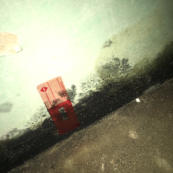
TOXIC BLACK MOLD
Black mold gets all the attention on the Internet & with the press. But its
not the most common mold that people have to deal with.
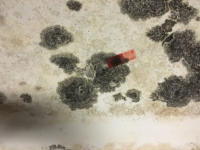
ASPERGILLUS/PENICILLIUM
Aspergillus/Penicillium is really many types of very similar molds. It is the most
common mold type that we deal with. It can be found just about anywhere in
your home. This category of mold can have multiple colors.
CRAWL SPACE EXAMPLES OF ASPERGILLUS/PENICILLIUM
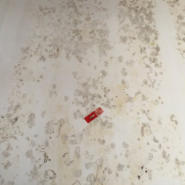
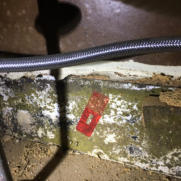
OTHER EXAMPLES OF ASPERGILLUS/PENICILLIUM
BEHIND WALL PAPER
UNDER KITCHEN SINK
OTHER TYPES OF COMMON MOLDS
Look below to see some samples from our mold library.
These samples have been identified by our lab.
Information For:
“Do it yourself mold removal”


CALL 317-647-6653


March 9, 2019
Verified Angies List Review
Sel - Indianapolis, IN
Couldn’t be happier. Brett and crew were the best. Jeff was always available
for advice. Well worth the money. Thank you for a job well done!
August 4, 2019
Google Review
Kevin Long - Indianapolis, IN
We had an issue at our house with water and mold damage. Jeff came out
on a Saturday and did a walk through and told me exactly what should be
done and was priced well below several other companies. Came out did
the work done very professionally and timely His guys did a great job and
I highly highly recommend using them if the need ever occurs. Thanks
again Jeff for your professionalism, hard work and excellent work.
Five stars are not enough to rate the work done!
ASK ABOUT OUR 5% BEST PRICE GUARANTEE
CALL 317-697-2046 TO HAVE
IT DONE BY PROFESSIONALS
ASK ABOUT OUR 5% BEST PRICE GUARANTEE

October 25, 2019
Verified Home Advisor Review
Romona - Indianapolis, IN
“Jeff and his staff went over and beyond the call of duty to help
my husband and I. We will not hesitate to call A+ Restoration
if we need assistance again.”